

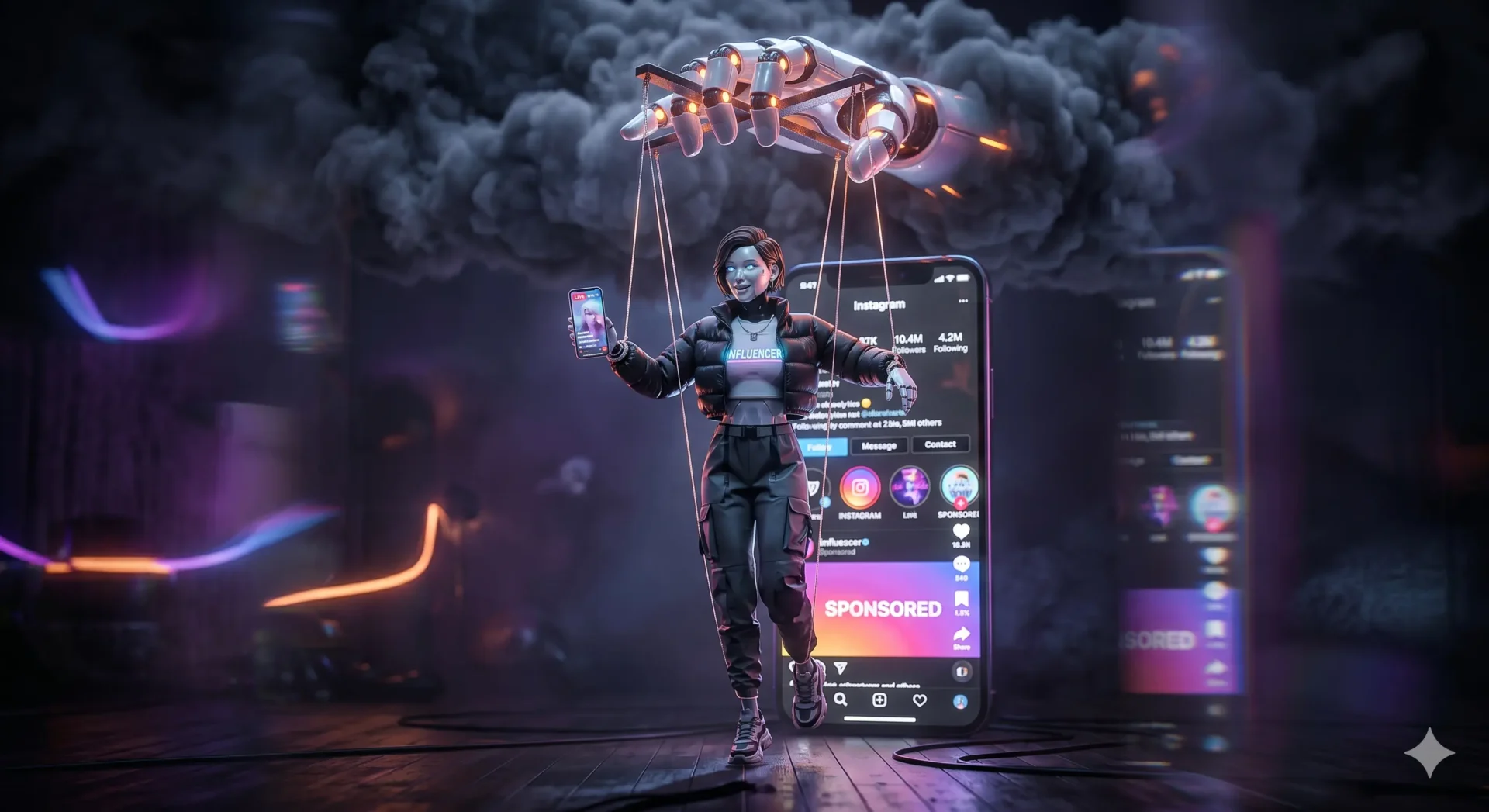
TL;DR / Key Takeaways
- Virtual influencers are AI-generated digital personas used by brands on social media, they look human but are entirely computer-made.
- Brands value them mainly for control over messaging, not just for reach or follower counts.
- New 2026 research (including my own master’s thesis) shows that the most successful virtual influencers have a deep “soul”, a cultural backstory, not just polished visuals.
- Brands face a real dilemma: scaling up a virtual influencer often destroys what makes it valuable in the first place.
- Full disclosure and transparency about their artificial nature is an ethical requirement, not an afterthought.
What are AI virtual influencers?
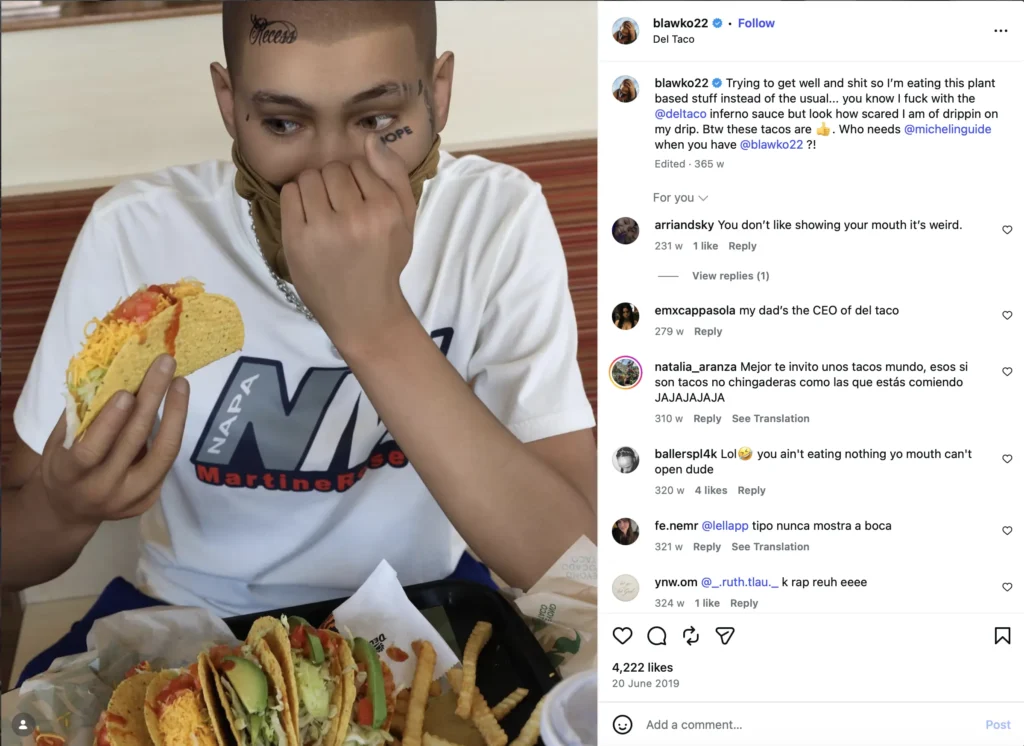
AI virtual influencers are computer-generated personas, built using CGI or AI tools, that post content on social media, collaborate with brands, and build real audiences, without being real people.
You have probably already seen them without realising it. Lil Miquela, a CGI model based in Los Angeles, has over 2.6 million Instagram followers and has partnered with Calvin Klein, Prada, and Samsung. Imma, a Japanese virtual model, works with IKEA, Porsche, and SK-II. Morocco’s first AI influencer was created by a digital marketing agency to reach audiences across seven MENA countries simultaneously.
What makes them different from a brand mascot or a cartoon character is that they behave like real social media creators. They post daily life content, share opinions, go to events, and interact with followers in comments and even through messaging apps.
There are two main types. CGI virtual influencers are hand-crafted by designers and animators. Every image is rendered manually, which is expensive but produces hyper-realistic results. AI-enabled virtual influencers use generative AI to produce content at much higher speed and lower cost, making them accessible to smaller brands too.
How big is the virtual influencer industry?
Virtual influencers are no longer a niche experiment. They are a growing segment of the global influencer marketing industry, and the numbers back that up.
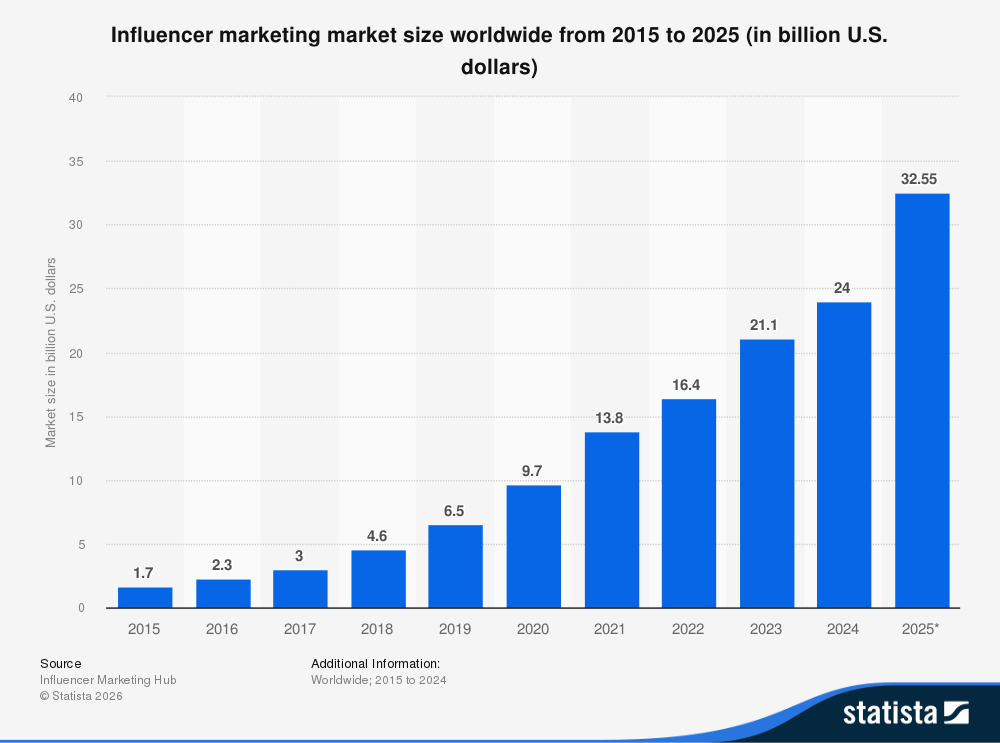
The global influencer marketing market was valued at approximately $24 billion in 2024, according to Statista. Virtual influencers are one of the fastest-growing segments within it, driven by improvements in AI image generation, video synthesis, and voice cloning.
A 2024 study published in Technological Forecasting and Social Change found that AI-powered virtual influencers can outperform human influencers on certain brand engagement metrics, particularly in categories where perfect visual consistency matters, such as fashion and beauty.
For brands, the appeal is straightforward: a virtual influencer never cancels a shoot, never posts something off-brand at 2am, and can appear in Tokyo and São Paulo in the same week. For AI beginners, it is worth understanding that this technology is no longer science fiction. Tools that generate photorealistic human faces, voices, and videos are already widely available, including tools you may already know how to use.
Why do brands actually use virtual influencers?
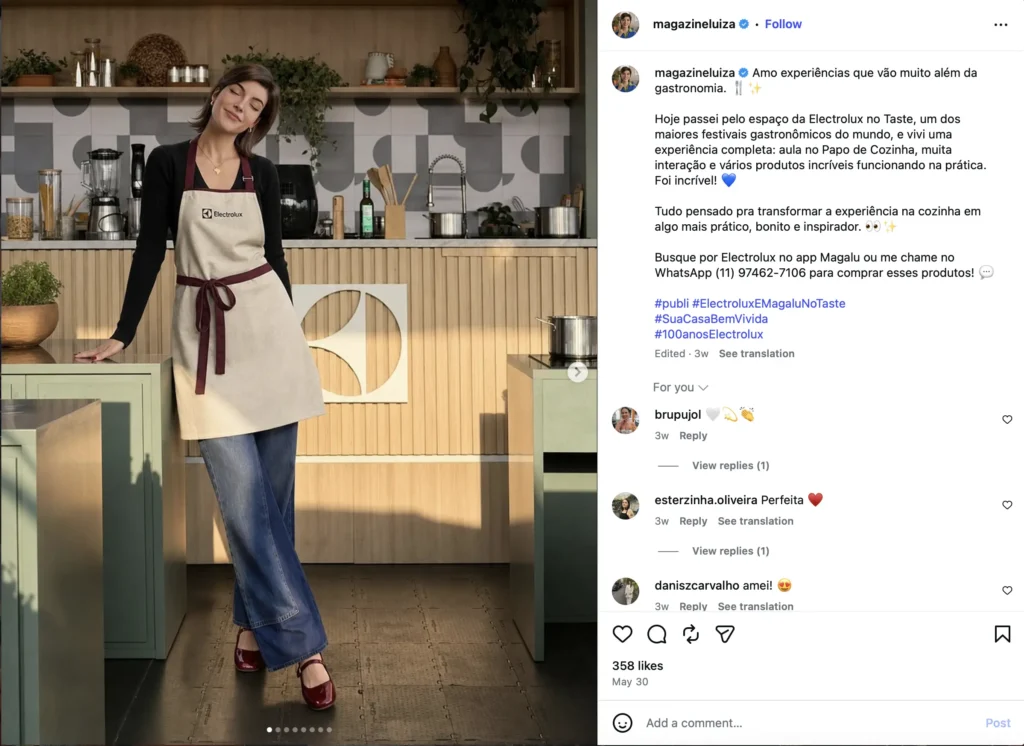
Brands use virtual influencers primarily to regain control over their messaging, not just to reach more people.
That finding comes directly from my own research. For my master’s thesis at Jönköping International Business School (JIBS), completed in May 2026, my co-author Eleni Kotsini and I interviewed 13 virtual influencer practitioners across 6 continents and 11 countries, including brand strategists, independent creators, agency founders, and AI startup CEOs. We also analysed 8 public industry talks from practitioners at TED, TEDx events, and major marketing conferences.
One industry analyst, the founder of the leading global virtual influencer reference platform, told us:
“Brands are just virtual characters in the end. They are just a brand, right? They don’t have any life. So, the virtual influencer is actually an improvement for them, because of the humanization of the brand. For the first time, you can humanize something that is lifeless.”
That quote captures why control matters so much. When you work with a human influencer, the human’s off-brand moments, scandals, or personal views become your problem. With a virtual influencer, every word, every image, and every brand association is decided before the content goes live. That governance, as our research found, is the actual product brands are buying.
This aligns with broader academic findings. Research by Sands et al. (2022) in the European Journal of Marketing found that virtual influencers give brands a level of strategic leverage over messaging that is structurally impossible with human creators.
What does the research say about how they work?
Effective virtual influencer deployments follow a pre-deployment architecture: governance decisions made before the character ever appears publicly are the most important ones.
Our research identified this as the first major finding. The brands and agencies that managed the most durable and commercially successful virtual influencers all shared one pattern: they invested heavily in codifying the character’s identity before the persona went live. This included personality documents, tone-of-voice guides, backstories, cultural anchors, and in some cases, formal AI prompt constraints that limited what the character could say.
One participant who co-developed a national virtual influencer for a major television network in Spain described building an ethics decalogue alongside university researchers, legal scholars, philosophers, and engineers, all before a single piece of content was published.
Compare that to the operators at the other end of the spectrum in our dataset. Those who skipped this step and let generative AI produce the character’s personality on the fly produced content, but nothing that built lasting brand equity. The character became a replaceable content machine rather than a genuine brand asset.
Research by Gerlich (2023) in Administrative Sciences found that virtual influencers demonstrably influence consumer brand perceptions and purchase intentions, comparable to human celebrity endorsers. However, that influence depends on consistent, coherent storytelling, which only structured governance can sustain.
The “Body and Soul” problem every brand faces

The most important distinction in virtual influencer strategy is the difference between technical construction (the “body”) and cultural-biographical depth (the “soul”). Technical perfection without soul does not generate lasting audience investment.
This is one of the original theoretical contributions from our thesis, and it comes directly from a practitioner quote that stopped us both mid-analysis:
“Character development has two things: body and soul. The body can be anything, a MetaHuman, a doll, anything. But what matters is the soul. Take Spider-Man: can he feel? I do not think so. But people believe in him anyway. It is like making a film character.”
The agency behind this quote had built one of the most commercially successful virtual influencers in Southeast Asia. Their process involved assigning their character a Myers-Briggs personality type, a star sign, a hometown with specific cultural associations, and a migration narrative that explained why she spoke the way she did. These details were never marketing content. They were architectural decisions that shaped every partnership, every post, and every campaign the character appeared in.
The practical implication is uncomfortable for brands focused on efficiency: you cannot generate soul with a prompt. The characters that generated the most authentic audience investment across our dataset were those where humans had made slow, deliberate decisions about who the character was before automation took over the content production.
A 2023 study in the Journal of Interactive Advertising by Byun and Ahn found that virtual influencers who display consistent personality traits across content perform significantly better on audience trust metrics than those who vary in tone or style. Consistency requires architecture, not improvisation.
The characters that failed, or plateaued quickly, were those where the body was highly polished but the soul was an afterthought.
The hidden risks brands don’t talk about publicly
Our research identified a pattern we named the “Governance Gap”: a set of failure modes that no internal governance architecture can fully prevent.
Most public discussion of virtual influencers focuses on their advantages. The risks stay private. One of the clearest examples in our dataset involved a brand that had deployed a virtual influencer and integrated a chatbot to handle audience interactions at scale. The engagement strategy worked: the character was gaining 5,000 new followers per day. But the volume of chatbot conversations exceeded the moderation team’s capacity to review. The character occasionally responded outside its governance guidelines.
The most serious failure mode in this category is what we called the reputational externality: a brand that behaves responsibly can still suffer damage because another virtual influencer in the same category acts unethically. When one AI persona becomes controversial, all AI personas face heightened scrutiny, regardless of how carefully each was built.
There is also a structural tension we named the “Scale and Soul Dilemma.” The conditions that allow a virtual influencer to operate at maximum scale, including AI-generated content, geographic distribution across many markets, and high posting frequency, systematically reduce the resources available for building narrative depth. Brands that scale too early, before their character has genuine cultural roots, tend to produce high-volume content that audiences engage with briefly but do not invest in.
Research by Xin et al. (2024) in the Journal of Research in Interactive Marketing found that virtual influencer deployments that prioritise volume over narrative consistency show measurable declines in corporate reputation scores over time.
The brands in our study that avoided this dilemma all applied the same logic: soul first, then scale.
Are virtual influencers ethical?
Virtual influencers raise real ethical concerns, and the industry has not resolved them yet.
The most significant issue is transparency. A virtual influencer that is designed to feel emotionally real, responds to followers in direct messages, and never discloses its artificial nature can induce genuine emotional attachment before an audience realises they are interacting with software. One participant in our study described a follower who had developed a romantic attachment to a virtual persona before knowing it was AI-generated. This is not an isolated incident. It is a structural risk built into the technology.
Our thesis argues that disclosure should be treated as a pre-deployment architectural requirement, not a retrospective correction. Labelling a virtual influencer as AI-generated after it has already built a parasocial relationship with an audience is not transparency. It is damage control.
The FTC’s endorsement guidelines already require clear disclosure when a brand relationship exists, but they do not yet specifically address the AI nature of a persona. Regulatory frameworks are catching up, but slowly.
There is also the question of cultural representation. Virtual influencers have been designed to represent cultures their creators do not belong to. When cultural markers are used as aesthetic choices without genuine cultural investment, it risks reducing real identities to brand props.
These issues do not mean virtual influencers are inherently problematic. They mean that building one responsibly requires more intentional design than most industry guides suggest. As AI tools make it cheaper and faster to create virtual personas, the gap between “technically possible” and “ethically sound” will continue to widen unless the industry develops clearer standards.
Frequently asked questions
Are virtual influencers AI-generated?
Not all of them. Some virtual influencers are built using traditional CGI, which involves manual design by artists and animators rather than generative AI. Increasingly, however, AI tools are used to generate images, video, voice, and even conversational responses, making the line between CGI and AI-enabled virtual influencers less distinct.
Can virtual influencers replace human influencers?
Probably not entirely, but they are increasingly competitive in specific contexts. Virtual influencers offer complete brand control, no reputational risk from the influencer’s personal life, and unlimited availability. Human influencers offer authentic lived experience and genuine community trust that virtual personas struggle to replicate. Most advanced brands treat them as complementary, not substitutes.
Do people know when they are following a virtual influencer?
Not always, and this is one of the key ethical concerns in the field. Research has found that audiences, particularly younger ones, do not always distinguish between real and AI-generated personas. Platform-level disclosure requirements vary widely by country, and self-regulation within the industry is inconsistent.
How much does it cost to create a virtual influencer?
It depends significantly on the approach. A high-end CGI virtual influencer managed by a professional agency can cost tens of thousands of dollars to launch and thousands per post to maintain. AI-enabled virtual influencers can be created for a fraction of that cost using current generative tools, but the “soul”: the cultural depth and narrative architecture that makes them commercially durable, still requires significant human creative investment.
Which brands are using virtual influencers?
A wide range, from global luxury brands to regional startups. Prada, Balmain, Samsung, Nike, Adidas, and IKEA have all collaborated with virtual influencers. National tourism boards and government institutions have deployed them too. The research base for virtual influencers is still young, but the commercial adoption has accelerated significantly since 2020.research base for virtual influencers is still young, but the commercial adoption has accelerated significantly since 2020.
This article is based on original research from my master’s thesis in International Marketing at Jönköping International Business School (JIBS), completed in May 2026. The study involved 13 semi-structured interviews with virtual influencer practitioners across 6 continents and 11 countries, analysed using reflexive thematic analysis. All participant quotes are used with consent and anonymised.
Want to go deeper? You can download the full thesis here: Who Pulls the Strings? A Brand-Oriented Exploration of Virtual Influencers as Communication Governance Infrastructure
